EIOPA Report: Extreme heat as key leading climate-related liability risk for insurance and IORP sectors
The European Insurance and Occupational Pensions Authority (EIOPA) with a new report on the impact of climate change on life and health insurers and occupational pension providers.
Published on
2026-10-05
by
EIOPA

What does tomorrow’s sustainability function look like?
The focus of the sustainability function is changing from commitments and reporting to leading business through uncertainty. David Carlin shows how sustainability teams are managing that change.
Published on
2026-09-29
by
 investESG
investESG

STATEMENT: UN Secretary-General's Climate Summit Calls for Faster, Fairer Climate Action
Ani Dasgupta, President and CEO of World Resources Institute, issues a statement on 2026 Climate Summit
Published on
2026-09-25
by
 WRI
WRI
WRI
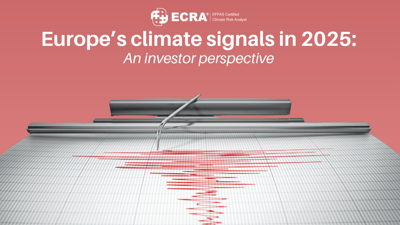
Europe’s climate signals in 2025: An investor perspective
Europe’s 2025 climate data points to growing physical risks across sectors, from heatwaves and drought to wildfires and water stress. This article looks at what these signals represent for investors, including resilience, adaptation capacity and long-term financial exposure.
Published on
2026-09-23
by
 EFFAS
EFFAS
EFFAS

What do leaders need to know about climate tipping points?
Climate tipping points may irreversibly disrupt our economies and infrastructure – here’s how to start integrating this risk into long-term business planning.
Published on
2026-09-22
by
investESG
investESG

Staatliches Engagement zur Förderung der Transformation
Angesichts zunehmender Klimarisiken gewinnen Staatsanleihen als Hebel zur Finanzierung der CO2-armenTransformation an Bedeutung. Der konstruktive Dialog zwischen Investoren und staatlichen Emittenten kann eine widerstandsfähige und nachhaltige wirtschaftliche Entwicklung unterstützen. DPAM setzt dabei auf ein Nachhaltigkeitsmodell für Länder, das seit 2007 besteht und Umweltaspekte als zentrale Säule integriert. Governance wird als Grundlage für Klimaresilienz betrachtet, da starke Governance-Strukturen eine effektivere Politikumsetzung und bessere Ressourcenallokation ermöglichen. Durch individuelles und kollaboratives Engagement mit staatlichen Emittenten strebt DPAM an, die Ausrichtung auf die Ziele für das Pariser Abkommen voranzutreiben und die Glaubwürdigkeit von Klimazielen zu bewerten.
Published on
2026-09-03
by
 DPAM
DPAM
DPAM