
A decade after the idea took shape, Forest Resilience Bonds are helping partners finance and fund projects across the western U.S., reducing wildfire risk while enhancing the water supply and supporting local jobs.
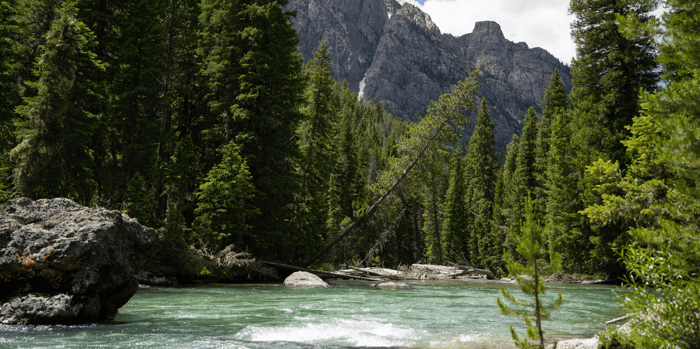
Photo credit: Alex Moliski – Unsplash
By: Todd Gartner and Zach Knight
When Alecia Weisman drove through a severe burn scar left by California’s Dixie Fire, which burned nearly 1 million acres in 2021, the scale of the destruction was difficult to comprehend.
“Every single tree is dead,” said Weisman, Watershed Science Director at the South Yuba River Citizens League. “It’s total forest loss.” Without the resources to restore landscapes after major fires, she said, there is a risk that some forests will never fully recover.
Historically, low-intensity fire was common in North American forests, ignited either naturally or by Indigenous People to manage lands. Such fire – usually carried out during cooler, wetter periods – helped prevent the buildup of dry, flammable vegetation. It also encouraged new growth and maintained healthy landscapes. But those traditions were steadily replaced by a practice of suppressing fire, which has contributed to overgrown forests primed for the kind of severe wildfires seen today. Rising temperatures and prolonged droughts are also adding to the severity.
In response, governments and communities have poured money into fighting wildfires and recovering from them. But often overlooked are the benefits of reducing the risk that wildfires become catastrophic in the first place. Doing so is cheaper and far less destructive than dealing with the aftermath.
Getting Ahead of Wildfires
A decade ago, Blue Forest, a nonprofit conservation finance organization, WRI’s Cities4Forests Initiative, USDA Forest Service and the National Forest Foundation began developing a way to get more money into proactively restoring forest health before disaster strikes. While many organizations benefited from healthier forests and watersheds, there weren’t clear pathways for them to invest in restoration on public lands.
The resulting Forest Resilience Bond brings together public agencies, utilities, corporations and other organizations that benefit from forest restoration with investors willing to provide money upfront. That allows work to begin sooner than reimbursement processes often permit. WRI helped quantify the economic case for early projects, while Blue Forest modeled ecosystem benefits and worked with participating organizations to structure the financing.
The first Forest Resilience Bond launched in California in 2018. Since then, the model has expanded across the western U.S. Blue Forest reports that Forest Resilience Bond projects have deployed over $50 million to improve forest health and reduce wildfire risk across nearly 50,000 acres, helped protect over 170,000 acre-feet of water supplies that feed downstream communities, and supported 600 jobs by directly or indirectly funding them. The model created opportunities for beneficiaries to work together to fund forest restoration at a larger scale, more efficiently and more quickly than traditional funding approaches alone.
A decade after the first Forest Resilience Bond was conceived, its impact can be seen in the experiences of communities that benefit from healthier forests through clean water, restoration jobs, and forests that can better withstand fire. Here are three examples of how these benefits are taking shape on the ground, shared by the people experiencing them firsthand.
Protecting Water Supplies from Severe Wildfire: North Yuba Watershed
Northern California’s Yuba Water Agency has relied on the North Yuba watershed for decades for clean water. Its officials are keenly aware that a severe wildfire could send ash, sediment and debris into rivers and reservoirs, threatening water quality, utility infrastructure and the communities they serve.
“It’s a watershed that we’ve relied on for many, many decades to provide us this clean, beautiful water,” said JoAnna Lessard, watershed manager at Yuba Water Agency. “And now this forest and the state that it’s in puts all of that at risk. We need to do what we can to work with partners to address this.”
For the agency, investing in forest restoration made good business sense given that the health of forests upstream directly affects the water communities rely on downstream. Healthy forests naturally slow and filter water as it moves through soils and vegetation, helping regulate runoff, reduce erosion and sediment, and maintain clean, reliable water supplies.
“Our watersheds are a major part of our infrastructure,” said Willie Whittlesey, Yuba Water’s general manager. “They’re not concrete and steel or pipelines, but they’re absolutely part of our infrastructure, and we need to manage them.”
In 2018, Yuba Water became a funder of the first Forest Resilience Bond, helping to finance restoration in the Tahoe National Forest. While Yuba Water depends on the health of the watershed, there was no straightforward way for the agency to invest directly in restoration work on federal lands. The Forest Resilience Bond created a mechanism that allowed Yuba Water and other downstream beneficiaries to support forest restoration – what the agency views as a form of natural infrastructure – rather than waiting to respond after a severe fire caused damage.
Continue reading here.
Featured WRI Experts: Todd Gartner – Director, Cities4Forests and Natural Infrastructure
Published by
 WRI - World Resources Institute
WRI - World Resources Institute
