
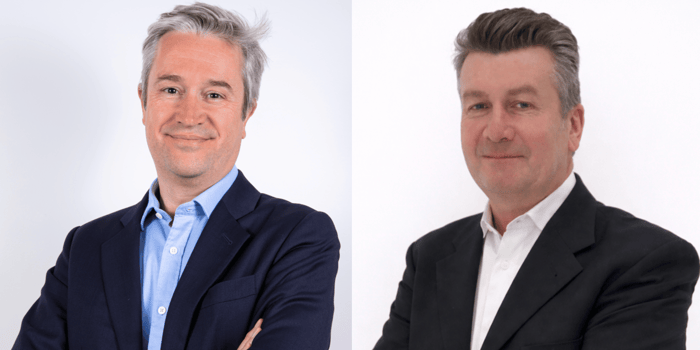
An interview with France Valley's Arnaud Filhol and François Xavier Douin

Photo credit: France Valley
Pekola Forest, Finland
France Valley is one of Europe's largest independent timberland manager, with approximately €1.5bn of natural assets under management and more than 650 prime forest properties across 12 European countries. Founded in 2013, the firm manages a €700m French forestry vehicle, the largest single forestry open-ended fund in Europe, alongside a pan-European institutional strategy and a dedicated afforestation and carbon vehicle.
In this interview, Arnaud Filhol, co-CEO and co-founder, and François Xavier Douin, European Sales Director, explain why France Valley deliberately invests across the whole of Europe rather than within a single region, how the firm holds its forestry managers to a binding sustainable management charter, and how the EU's new carbon removals framework changes the case for European afforestation.
The interview was conducted by Hubert Langer, Senior Advisor at Sustainableconsult.
Q1: In the last 15 years France Valley has acquired more than 650 forest areas within 12 European countries. This is an outstanding challenge with regards to evaluating opportunities and completing transactions and also a significant challenge to oversee consolidated timberland management over the holding period. How do you successfully select forest assets, set up a sustainable transition plan, and closely monitor these assets?
Let me start with why the number is 650 and not 15.
European forest ownership is structurally atomized. Outside a handful of institutional-scale estates, private forests in Europe are held by millions of individual owners in estates far too small to be relevant to an institutional buyer on a standalone basis. This dispersion is a defining characteristic of the timberland asset class and is either an obstacle or an opportunity depending on whether or not you have built the machine to handle it.
We built the machine. Today this means more than 90 local forestry partners across Europe, screening a pipeline of opportunities many times larger than what we ultimately acquire. We are not bidding in auctions against other funds; we are shown assets before they reach the market, by partners who have worked with us for years and know precisely what we will and will not buy. This off-market access allows us to acquire consistently below independent appraisal value, and to generate an extra source of return by aggregating those parcels into institutional-scale blocks. This consolidation premium is real, and it is only available to a manager willing to do 650 transactions instead of 15.
Selection Every asset passes three filters before reaching our Investment Committee. First, a geographic and climatic exclusion screen: we have mapped the European investable universe and formally excluded approximately 35% on biodiversity, climate-risk and geopolitical grounds. That decision is taken once, at universe level, which removes a great deal of irrelevant deals later. Second, full technical underwriting – standing volume, species composition, age-class structure, soil and water, access, distance to industrial demand, legal title. Third, a pre-investment ESG analysis. Every asset is independently appraised by a third party before purchase.
Transition plan No asset enters the portfolio without a 10-to-15-year management plan, written before completion and co-owned by the local forestry manager partner who will execute it under our supervision. Where an asset arrives with a legacy of even-aged monoculture – common, particularly in Central Europe – the plan sets out the conversion path: species diversification towards climate-resilient mixes, movement towards continuous cover forestry where the site allows, thinning schedule, regeneration strategy, deadwood and habitat-tree retention. This plan has to abide by our Sustainable Forest Management Charter, which the forestry manager countersigns. It is a term of the mandate, not a mere statement of intent.
Monitoring We run a lean central team of c. 50+ professionals, 16 of them forestry specialists with dual finance and forestry training, and we deliberately do not replicate local operational capability in-house. What we centralize is governance and data. Each property carries an annual internal rating, updated from field feedback provided by the local partner. Certification audits run continuously across a portfolio that is 100% PEFC and/or FSC certified. Harvest execution, silvicultural spending and wood sales volume against plan are reviewed at quarterly operator meetings and validated during site visits by the investment team. Over the past two years we have invested heavily in an end-to end state of the art proprietary ERP, allowing for high-quality investor-grade reporting.
Q2: France Valley has a clear commitment to sustainable timberland management, and the protection and regeneration of biodiversity is a key priority within your management charter. How do you implement your biodiversity goals, and how do you measure biodiversity potential – a very innovative stance in the market?
Our portfolio-wide instrument is the Sustainable Forest Management Charter. It is not a simple policy statement. It is countersigned by each forestry manager partner, and a binding dimension of their mandate, converting intentions into measurable thresholds. Let me share a representative selection:
- At least 5% of the surface of each property is set aside as free evolution, senescence or ageing zone – producing a 5% average across the portfolio.
- An average of 10 to 20 m³ per hectare of dead, dying or decaying wood is retained in each forest.
- 5 to 10 living habitat trees per hectare, selected on ecological interest – cavity trees, microhabitat-bearing trees – rather than on convenience.
- Clear-cutting is not a management objective. Outside a sanitary context it may not exceed 2 hectares, with a minimum of 100 meters between two clearcuts.
- Monospecific blocks above 2 hectares are prohibited. Where planting occurs without natural regeneration, at least two species must be mixed on the same site.
- No new drainage in peatlands. No deep ploughing beyond 30 cm, no stump removal, no aerial spraying of any phytosanitary product, no GMOs. Non-natural plant protection products only where legally required or under genuine health threat, and then only with prior approval from our management team.
- Buffer zones of at least 5 meters along rivers and streams, 10 to 15 meters around lakes and ponds.
While several of those commitments carry short-term economic cost, we strongly believe in their long-term value enhancement.
On selected large estates – currently in France – we apply the Potential Biodiversity Index, developed by CNPF (France’s national center for private forest ownership) in collaboration with leading French agency INRAE (national research institute on agriculture, food and environment). It is measured at acquisition and every ten years thereafter. It does not attempt to count species, which at portfolio scale is neither affordable nor reliable; it scores a stand’s capacity to host biodiversity across field-assessed factors – native species diversity, vegetation structure, deadwood, large living trees, microhabitat trees, open, aquatic and rocky environments, and continuity of forest cover. We chose this indicator because it is peer-reviewed, publicly documented and used by public forestry agencies, with a publicly available methodology.
We will not claim that we run a field-based biodiversity index across 650 properties in twelve countries. Nobody credibly does, and I would look carefully at any manager who says otherwise. What runs across the entire portfolio is the Charter, the annual property-level rating, and continuous certification audit.
Around that sits the external architecture: Article 9 under SFDR; the Greenfin label, awarded by Bureau Veritas on behalf of the French Ministry of Ecological Transition, which triggers independent third-party audit rather than self-declaration; 80% alignment with the EU Taxonomy; PRI signatory; and membership of the International Sustainable Forestry Coalition and of the Organization for Biodiversity Certificates (OBC), created with Carbone 4 and the Muséum National d’Histoire Naturelle.
One forward-looking point. Through the OBC we are working on the valorization of these actions as biodiversity credits. We are patient and recognize that the market is immature We want to avoid monetizing ahead of methodology being adopted. We trust that a decade of contractual thresholds, annual ratings and audited certification means that when the market does become institutional, our assets will hold the baseline, and we will have the time series credit issuance requires.
Q3: Sustainably managed forests are more resilient to physical risks – drought, pests, wildfire. How do you manage these risks, and how conservative is your approach to avoiding high-risk areas?
There are two philosophies available to a European timberland manager. One is to concentrate in a single region with a favorable risk profile. The other is to accept that no European region is risk-free, that each carries different types of risks, and to build a portfolio in which no single peril can have a material impact. We took the second route, and I would argue the last five years have supported it.
To be clear, this is not an argument against any particular geography. We own boreal forests – we hold assets in Sweden and Finland -... but do not concentrate on boreal forests only. While this region has low fire risk, it displays a large proportion of spruce, and is therefore exposed to bark beetle, windfalls and snow-break; Central European spruce mortality since 2018 is the largest single value-destruction event in modern European forestry. The Mediterranean carries fire risk and comparatively little beetle risk. The Atlantic seaboard carries storm exposure. These perils are not correlated with one another, and that is the entire argument for a pan-European strategy.
Our framework has four layers.
Exclusion, at universe level We exclude high-incidence wildfire zones – particularly low-altitude Mediterranean resinous stands with poor access and a history of repeat fires – sites with structural water deficit under various climate projections, and jurisdictions where property rights or political stability do not meet our standards. We would rather forgo the return than underwrite a peril we cannot manage. This is the least glamorous part of the process and by some distance the most protective.
Diversification, at portfolio level Twelve countries, four climate zones from boreal to Mediterranean, hardwood and softwood, and a deliberate spread of age classes. Position sizing is capped so that no single holding – and no single fire or storm catchment – represents exposure that could move the fund’s overall value materially.
Silviculture, at asset level Here the premise of your question is exactly right: sustainable management is risk management. Converting even-aged monocultures towards mixed, uneven-aged stands, which are markedly less vulnerable to both wildfires and pest outbreaks. Thinning on time, because dense stands are simultaneously the most drought-stressed, the most attractive to bark beetle and the most flammable. Investing in the physical resilience infrastructure in the form of access tracks letting fire services reach the stand, water tanks, well maintained firebreaks, brush clearing at interfaces.
Residual transfer and financial buffering We take fire and storm insurance on our European forests wherever it is technically and economically feasible. Beyond that, the fundamental buffer in forestry is harvest optionality: if a market or a season is bad, we defer the cut. The tree keeps growing, the volume keeps accumulating as we wait. That shock absorber does not exist in most real asset classes.
The evidence lies in the drawdown: through the 2022–23 rate and inflation shock, European forest values held broadly steady while most real asset classes repriced sharply. Resilience is a key strength of the asset class.
Q4: Alongside your core European timberland strategy you are launching a dedicated carbon solutions strategy. What is the concept, and how do you address the challenges of a market still working towards generally accepted certification standards?
The concept is deliberately narrow, and its narrowness is the point.
With this new vehicle, we do afforestation only – the creation of genuinely new forest on bare, degraded or marginal land that the fund acquires in freehold. We are not involved in improved forest management nor avoided deforestation, and we do not buy credits on the secondary market. That choice answers, structurally and in advance, the two questions that have destroyed credibility in the voluntary carbon market: additionality and permanence.
Additionality, because the counterfactual is a field. There is no baseline modelling exercise, no scenario in which the carbon would have been sequestered otherwise. Permanence, because we own the land outright – no landowner counterparty, no lease to renegotiate, no third-party reversal risk outside our control.
That last point deserves emphasis for an institutional audience. This is a two-legged return: land appreciation and forestry intrinsic value on one hand, provoding downside protection, carbon credit issuance on the other.
On standards – your question is the right one, and the answer moved materially in July. On 9 July, the European Commission adopted the delegated regulation establishing CRCF certification methodologies for carbon farming, with afforestation explicitly among the three activities covered. It is now in the Parliament and Council scrutiny period and not yet in force.For the first time there is an EU-wide certification standard for afforestation removals, built on the QU.A.L.ITY criteria – Quantification, Additionality, Long-term storage, Sustainability. This is a regulated quality benchmark in the world’s largest regulated carbon market.
Our transition approach is dual-track. We register projects under the Verra Verified Carbon Standard at inception, because that is the operational standard with liquidity and buyer recognition today. The Commission has built a recognition pathway allowing existing certification schemes to be approved as CRCF-compliant – so our credits are positioned to be issued as, or converted into, CRCF units rather than stranded outside the framework. We are watching the Commission’s assessment of whether CRCF removals might eventually be integrated into the EU ETS.
An external validation point: one of our afforestation projects holds an A rating from MSCI. For context, MSCI rates over 4,000 carbon projects on a seven-point scale, no project has ever been awarded the top AAA band, and only a low single-digit percentage of rated projects reach A or above.
Q5: Some investors still believe sustainable investments must bear lower returns. Why does sustainability in long-term timberland actually justify higher cash-flow returns?
Within forestry you do not exclude – you improve. The sustainability decision and the productivity decision are the same decision, taken by the same forester at the same time. Three channels show it.
Biological yield A forest is a growing organism, not a depreciating structure. Planting a specie suited to the site, thinning on schedule rather than deferring to save cost, respecting soil during extraction, maintaining hydrology – these are the textbook definition of sustainable management, and they are also the levers that raise annual cubic meters per hectare and, more importantly, the grade of what you eventually cut. The difference between a sawlog and pulpwood is a multiple, and it is determined by decisions taken twenty years earlier.
Avoided mortality The largest destroyer of forestry returns is not a weak timber price, it is dead trees. A drought-stressed spruce monoculture that loses its stand to bark beetle does not underperform – it goes to salvage value in a flooded salvage market. Every resilience measure we take is, in return terms, a reduction in the left tail.
Exit, the allocators most consistently under-appreciate Ask who the marginal buyer of a European forest portfolio will be in 2035. Overwhelmingly it will be an institution operating under Article 9 or equivalent constraints, reporting under CSRD and disclosing under TNFD. That buyer cannot underwrite an asset with no documented ESG history, and will not pay full value for one. A ten-year audited record of contractual commitments, certification and carbon accounting is not a mere compliance cost. It is exit-multiple protection, and it accrues every year.
Add the optionality (carbon and, prospectively, biodiversity credits) accruing to assets managed to a standard that can be proven – and the conclusion is straightforward. In timberland, sustainability is not a constraint reducing the return, but rather a key component
Q6: Can you indicate the target IRRs for your fund offerings, and how they fit into an institutional portfolio?
Happy to – with two framings first, because headline IRRs in this asset class are compared sometimes too casually.
First, one point on leverage. Our vehicles use none.
Second, on the underlying assets. Our forestry funds are exclusively comprised of prime forestry estates and cash. No infrastructure, no sawmills or downstream processing, no listed timber equities, no development land. The return comes from trees growth and from the land beneath them, not from an operating business attached to the forest – which matters when comparing targets.
With those two points made – targets rather than promises, past performance no guide to the future, and the detail properly sits in the offering documentation:
Pan-European core timberland – available as a pooled evergreen vehicle and through separately managed accounts – targets 5% to 7% net per annum. Article 9 under SFDR, Greenfin labelled, no leverage.
European afforestation and carbon –– targets a net IRR above 10%, reflecting greenfield development risk and longer duration.
For institutions building a first natural capital allocation, the combination we would point to is this: an unlevered real asset with bond-like volatility, equity-like duration, negative correlation to fixed income.
Contact: Hubert Langer, Langer@sustainableconsult.de
Published by
 investESG
investESG
