
NYU Stern Center for Sustainable Business maps sustainability strategies through Return on Sustainability Investment (ROSI™) Automotive Sustainability Framework
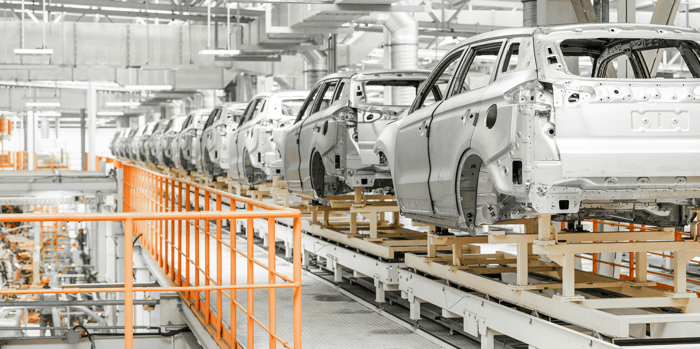
Photo credit: Getty Images / Unsplash+
What Is the ROSI™ Automotive Sustainability Framework?
Developed by the NYU Stern Center for Sustainable Business, the Return on Sustainability Investment (ROSI™) Automotive Sustainability Framework maps ten sustainability strategies across the automotive value chain, identifying the practices, financial benefits, ROSI™ value drivers, and proposed monetization methods associated with each.
Based on an academic review and interviews with automotive company executives and subject-matter experts, and sponsored by PwC, the research builds on the foundational ROSI™ methodology, which provides a systematic approach to identifying and monetizing the financial benefits of sustainability actions.
The global automotive industry – producing more than 90 million vehicles annually and generating more than $2.75 trillion in revenue – sits at the center of the energy transition. Operating on net margins of 2–7%, with raw materials representing 50–60% of manufacturing cost, automakers have little room to absorb rising input costs, supply chain disruptions and carbon costs, including the EU's Emissions Trading System and incoming Carbon Border Adjustment Mechanism. Yet these same pressures create some of the clearest near-term opportunities for financial value creation, particularly in decarbonization and electrification, sustainable materials sourcing, and circularity.
CSB’s research maps ten automotive sustainability strategies, each linking specific practices to financial benefits and a proposed monetization method that supports the internal business case for sustainability investment. Click here to explore each strategy
Additionally, CSB maps the automotive strategies and practices to nine ROSI™ value drivers – operational efficiency, risk management, sales and marketing, customer loyalty, innovation, supplier relations, talent management, media coverage, and stakeholder engagement – across the automotive value chain. The full findings are presented in the white paper Embedding Sustainability into Automotive Business Strategy Drives Transformation and Financial Value.
Case Study: Sustainable Materials Sourcing
Steel and aluminum are the dominant inputs in light-duty vehicle manufacturing, accounting for approximately 66% of vehicle weight by material and a major share of the 50–60% of total manufacturing cost attributable to raw materials. On such thin margins, getting materials strategy right, from designing and procuring to end-of-life disposal methods, is central to competitive advantage. The regulatory environment is intensifying this pressure, as the EU Emissions Trading System has pushed carbon prices from approximately €30 per ton in 2018 to roughly €65-80 per ton in 2024-2025, with the EU Carbon Border Adjustment Mechanism now converting those embedded carbon costs into direct invoiced costs on imported raw steel and aluminum.
Our research finds that for companies with high materials intensity, a phased transition to green steel and aluminum can generate 8-9 figure value depending on company size, before considering green financing benefits, potential P/E improvements associated with emissions reductions, or fleet buyer revenue premiums. The financial model developed weighs options regarding the types and characteristics of green materials, along with the timing of transitioning, to ensure companies create benefits tied to reduced input costs, direct and indirect regulatory liabilities, and price volatility. It enables companies to capture financial value, as CBAM, fleet CO₂ standards, and battery content rules create compliance deadlines that reward early movers and penalize delay. Download the Sustainable Materials Sourcing Case Study.
A word from CSB Director Amy Skoczlas Cole
Dear CSB friends and colleagues,
Students are back on campus this week, and I’m excited to kick off a new academic year at CSB. For me, though – right now feels anything but business as usual.
External forces are reshaping the business landscape fast and furiously. AI is shifting labor and capital markets, with tech companies issuing roughly $500 billion in bonds this year for its buildout, about quadruple last year. Inflation and slow wage growth are deepening affordability challenges, while tariffs, extreme weather, and this spring’s closure of the Strait of Hormuz have added new strain to supply chains.
On the face of it, none of this is a sustainable business story. But seeing how external issues affect corporate performance – the natural resources a business depends on, the labor market it hires from, the capital it borrows against – is exactly the discipline sustainability was built to practice.
As we navigate economic realignment, the need is to make the financial case for investments in decarbonization, resilient food and supply systems, and infrastructure rigorously enough to compete for capital.
That’s exactly the work we’re focused on at CSB: helping companies integrate ROSI™ methodologies, equipping investors with tools developed with private equity partners to price external risk and opportunity, and preparing students to translate what’s happening outside a business into better decisions inside one.
If this resonates with you, I’d love to hear from you. Our work doesn’t happen in a vacuum, and it doesn’t happen alone.
Onward, with resolve,
Amy Skoczlas Cole
Additional Information
For more information on the ROSI™ Automotive Sustainability Framework, follow the link to the Center for Sustainable Business at NYU Stern.
Sustainable Business in Practice: Professor Shan Ge's research, funded in part by CSB and published by Brookings, reveals how rising insurance premiums affect households’ ability to invest in climate-resilient upgrades, highlighting unequal outcomes and potential policy solutions. Read the research here.
Published by
 investESG
investESG
