
According to respondents, the Austrian pension system is not sustainable, primarily due to demographic change.
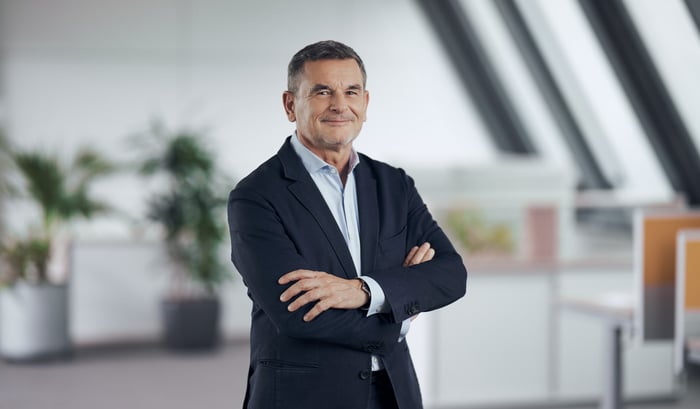
Photo credit: eup
Martin Sardelic, CEO Valida Vorsorge Management
The Austrian pension system faces major challenges. A
qualitative survey commissioned by Valida Vorsorge Management shows that
pressure for reform is increasing significantly, primarily due to demographic
change. Knowledge of and trust in occupational pension plans remain
insufficient. In light of the initial reform steps recently presented by the
government, the results make it clear: Not only are structural reforms needed,
but also greater transparency, information, and a general shift in societal attitudes.
Austria’s pension system is in
need of reform
Valida commissioned the opinion research institute
Triple M to conduct a qualitative survey in the form of focus groups. In the
spring, employees, employers, company executives, and HR managers of various
ages and from different industries were surveyed.
The study paints a clear picture: All respondents
perceive the Austrian pension system as in need of reform, particularly due to
demographic change and the increasing strain on the pay-as-you-go system. There
is therefore a strong desire for a robust second pillar.
Triple M Managing Director Christina Matzka:
“Respondents expect to receive around 50% of their net salary as a pension in
the future. This reflects very low confidence in the system and a high degree
of uncertainty. The second pillar is currently perceived as stronger than it
actually is, but when asked, respondents lack basic knowledge about
employer-sponsored retirement plans.”
Major Knowledge Gaps Regarding Occupational Retirement Plans
The survey reveals significant gaps in understanding
the second pillar. Many participants continue to associate occupational pension
plans primarily with the former severance pay. The “New Severance Pay” is
usually not even perceived as part of retirement planning, largely due to the
frequently chosen option of a one-off payment. The actual amount of
contributions and their impact on the pension are also unclear in most cases.
In general, however, occupational retirement plans are
recognized as very beneficial. Respondents would like to see higher ongoing
contributions from their occupational retirement plans to boost their
retirement benefits.
“The results confirm what we see every day: There is a
basic awareness of the issue, but knowledge about occupational pension plans
remains very limited,” says Martin Sardelic, CEO of Valida Vorsorge Management.
“If we want to stabilize the system in the long term, we must significantly
strengthen the second pillar. Greater transparency—and thus greater trust in
the system and in investments in the capital market—is essential for this.”
Occupational retirement plans
must be simple and flexible
From the respondents’ perspective, the ideal
occupational pension plan should be simple, secure, and at the same time
flexible. There is a clear desire for options, such as regarding payouts,
investments, or voluntary contributions. In any case, occupational pension
plans should make a noticeable contribution to the total pension in the future.
Respondents agree that more money is needed from the second pillar.
Clear differences emerge between the generations:
Younger people are more open to the capital markets and cite structural
challenges such as declining birth rates or later entry into the workforce.
Older people, on the other hand, focus on specific issues of fairness, planning
security, and the actual pension amount.
“We see a tension: On the one hand, there is a growing
awareness that the existing system alone will not be sufficient; on the other
hand, there is still a lack of trust in supplementary models,” says Philipp
Mayer, a member of the Executive Board of Valida Vorsorge Management. “This is
precisely where clear framework conditions and targeted incentives are needed
so that occupational pension plans can realize their full potential.”
Mayer continues: “If, as a result of the approved
reforms, people will in the future have to decide for themselves whether they
want to have their second-pillar funds invested more effectively and make them
part of their monthly pension, we urgently need to invest in education and
information.”
Experts on the Multi-Pillar Model
The surveyed CEOs and HR managers confirm the need for
action. While they generally assess the Austrian pension system as stable, they
see it coming under increasing pressure due to demographic trends, rising
government subsidies, and structural weaknesses.
In particular, the heavy reliance on the first pillar
and a comparatively underdeveloped occupational pension system are viewed
critically. In the long term, the experts expect a greater shift toward a
balanced multi-pillar model in which occupational pensions play a significantly
larger role. Furthermore, individual responsibility must be strengthened.
Countries such as Denmark are cited as role models.
Published by
 Valida Vorsorge Management
Valida Vorsorge Management
