
The CapMan Group is a leading private asset management company with over 30 years of heritage in the Nordic region.
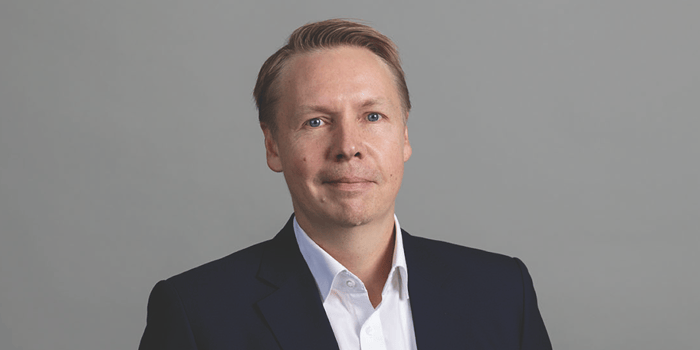
Photo credit: CapMan
Jyri Hietala, Managing Partner, CapMan Natural Capital
CapMan Natural Capital, the timberland management segment of the CapMan Group, was formed by the acquisition of Dasos Capital in 2024 and is amongst the first European investment managers and globally one of the largest fund managers, focused on forest investing. CapMan Natural Capital manages about 225,000 ha timberland.
In this interview Jyri Hietala, Managing Partner of CapMan Natural Capital gives deep insights into their prudent and successful management approach. He explains why the Nordic region is so attractive for timberland investments and demonstrates that sustainable goals and attractive returns can both be realised within a long-term investment.
Jyri Hietala was interviewed by Hubert Langer, Senior Advisor, Sustainableconsult.
* * * * *
Q1: In the institutional investor sector within the DACH region we observe increasing interest and investment allocations in the natural capital segment. Alongside the agricultural sector, timberland assets are at the forefront on the investors agenda. Jyri, can you explain the attractiveness of timberland assets and how they suit within the asset allocation for institutional investors?
Well-managed timberland investments can deliver attractive risk-adjusted returns alongside meaningful impact. The combination of high single-digit return expectations, stable and inflation-linked cash flows, low correlation with traditional asset classes, and clear, tangible impact makes timberland a compelling asset class. These are precisely the qualities institutional investors should look for when allocating capital to timberland.
Historically, timberland has demonstrated strong value preservation even in highly turbulent conditions. The defensive characteristics of timberland have been further underscored in recent periods of instability, including the aftermath of the Covid pandemic, the war in Ukraine and the recent conflict in the Middle East. Despite significant pressure on the global economy, periods of elevated inflation and softer demand in the forest industry, timberland portfolios have continued to generate solid returns with relatively limited volatility.
The resilience of timberland investments is largely driven by the biological growth of trees, which is inherently independent of economic cycles. As long as there is consistent demand for wood in the long-term, timberland investments will continue to produce returns through the steady increase in the value of standing timber.
Q2: What are the typical physical and commercial risks of a timberland investment and how do you manage these risks?
Timberland, like any other real asset, is exposed to both physical and commercial risks. At CapMan Natural Capital, we design our strategy and operations to systematically identify, mitigate and diversify these risks.
Physical risks in timberland investments include storms and strong winds, forest fires, drought, floods, pests and diseases, and snow damage. The level and nature of these risks depend heavily on the region. In the Nordics, for example, physical risks are relatively moderate compared with many other parts of the world, such as the US or Oceania. In Finland, large-scale forest fires are virtually non-existent, there are no hurricanes or tornados destroying vast areas at once, and pests and diseases currently do not pose a threat of widespread infestations. This does not mean that boreal forests are risk-free, rather, the risks tend to be local and manageable.
A key consideration for mitigating physical risks is geographical diversification, which acts as a natural hedge against extensive damage across a portfolio. In timberland investing, it is essential to understand and assess potential physical risks already during the investment phase, so that a clear management strategy can be developed. Such a strategy includes selecting tree species best suited to specific soils, optimising the timing of thinnings and final fellings, maintaining diversity in age classes and species, and ensuring that forests remain healthy and productive. Any residual risk that cannot be eliminated through management can be further reduced by appropriate insurance coverage.
The main commercial risks in timberland investments relate to timber demand and price volatility, regulatory and policy developments, and the fundamentally illiquid nature of real assets. Forest industries are influenced by general economic and market conditions, such as consumer spending and construction activity, which makes them cyclical. This cyclicality is reflected in fluctuating timber demand and prices, which can to some extent impact timberland returns through annual cash yields. These risks can be mitigated by entering into long-term off-take agreements with industrial buyers and by taking advantage of harvest optionality, meaning the ability to adjust harvesting schedules and accumulating timber on the stump when market conditions are weak. Operating in regions where there is demand for a broad range of roundwood assortments, such as sawlogs, pulpwood and energy wood, further reduces the dependence on any single end-product sector. This is especially true in the Nordics, where the forest industry uses all roundwood efficiently for a diverse set of products. Concentration risk is further diluted by a high share of exports to markets worldwide.
Regulatory and political risks are again highly dependent on geography. In well-developed European markets, these risks are comparatively low. Forest legislation is generally supportive, forest ownership is secured through strong property rights, commercial forestry has broad social acceptance, and forest property markets are active and well-functioning, offering both large-scale assets and individual properties suitable for building institutional portfolios. We can see that growing concern over climate change and biodiversity loss already influences regulation and is expected continue to do so. At CapMan Natural Capital we are convinced that these developments will also create new opportunities, particularly through emerging carbon and other ecosystem service markets, which can diversify revenue streams from timberland investments.
The illiquid nature of real assets is addressed by operating in mature markets with transparent forest property markets and a strong base of institutional and industrial buyers, such as those found in Northern European markets. Risk from illiquidity can be further mitigated through careful portfolio construction, focusing on scalable and divisible asset configurations that remain attractive to a broad universe of potential buyers.
Q3: One of the most important topics for a timberland manager is the asset selection process to ensure a high-quality of the forests and its ecosystems at the time of the purchase but also for the entire investment horizon. Apart from other managers who ramp-up their portfolios globally you focus nearly exclusively on the Northern European market. Can you explain your management approach and why this approach could be more attractive to investors?
CapMan Natural Capital is one of Europe’s pioneers in timberland investing, with historical core markets in Finland, the Baltics and Ireland. Our asset selection is driven by a focus on high‑quality forests, proximity to industrial roundwood demand, value‑creation potential through active management, clear ESG criteria for responsible investment, and a low‑risk, stable operating environment. At the same time, we seek diversification across different Northern European geographies.
Our investment strategy and asset selection combine mature core markets – such as the Nordics, with long‑established forest industries producing value‑added products, advanced infrastructure, a long tradition of responsible forest management and developed forest property markets – with more value‑add and opportunistic approaches in the Baltics and Ireland. These latter markets tend to be more volatile but offer attractive opportunities for disciplined, long‑term capital. Through careful portfolio construction, we have been able to provide our investors with attractive risk‑adjusted returns, stability and scale, already for over 15 years.
In Northern Europe, our acquisition strategy is rooted in a buy‑and‑build approach; actively acquiring properties, aggregating scale and consolidating holdings. Our track record includes over 1,000 transactions and the creation of more than 30 portfolio companies holding these assets. In the Nordics and Baltics, most assets are established semi‑natural coniferous and mixed forests, while in Ireland our core approach is greenfield investing by acquiring pasture and other land and afforesting it with Sitka spruce.
Across all regions, we manage forests with a long‑term perspective aligned with the fund’s lifetime yet acknowledging that forests extend beyond any single fund, and that the exit phase ultimately defines success. At CapMan, we are confident there will continue to be strong demand for high‑quality, responsibly managed forests, and our objective is to enhance the condition and value of the forests we acquire throughout the life of each fund.
Q4: The operational management, i.e. the boots-on-the-ground jobs to take care of the respective timberland assets is very important to ensure a sound and healthy forest development. As you have contracted operational managers to take over this responsibility, how do you select them and how do you monitor their performance?
CapMan Natural Capital has structured its operations so that the investment team is responsible for developing the overall value creation strategy at the asset level, while the day-to-day activities at the property level are carried out by local operational managers under contractual arrangements. This setup enables us to leverage local operational excellence, while maintaining a lean organization with centralized governance, risk management, and strong alignment with investor expectations. Close coordination and oversight of local managers is critical, requiring regular communication to ensure alignment and a shared understanding of the business plan.
CapMan Natural Capital has experience collaborating both with large industrial partners and more specialized local managers. In all cases, the selection criteria are consistent; each operational partner must demonstrate proven experience and sufficient scale in managing institutional-grade portfolios, the capability to operate under relevant certification schemes and sustainability objectives, appropriate staffing levels, training and safety protocols, and robust reporting standards.
Performance of operational managers is monitored through formal reporting obligations, regular meetings, site visits carried out by the investment team, and third‑party audits, with particular emphasis on compliance with certification and other sustainability criteria.
Q5: You have a clear sustainable management approach within your fund solutions. Can you describe which sustainability goals you pursue and how these goals are realised within the investments?
Sustainability is a key driver of resilience and long-term value creation at CapMan. The company is committed to the Science Based Targets initiative (SBTi) and is an early adopter of the Taskforce on Nature-related Financial Disclosures (TNFD) framework.
CapMan Natural Capital has focused on sustainable forest management since the launch of its first fund in 2009. It has played a pioneering role in making forest certification a market standard, advancing carbon measurement and reporting, and piloting additional voluntary measures to enhance biodiversity and carbon sequestration.
CapMan Natural Capital funds are aligned with the EU Taxonomy and classified as promoting sustainable investments under the SFDR. The funds are primarily aimed at climate change mitigation, and all assets are certified under FSC and/or PEFC standards. CapMan aligns its responsible investment practices with internationally recognized frameworks and standards, including the UN Global Compact, the UN Guiding Principles on Business and Human Rights (UNGPs), and the ILO Core Labour Standards. CapMan has also been a signatory of the PRI since 2012.
CapMan Natural Capital’s approach to climate change mitigation and biodiversity enhancement is to establish a baseline at the asset acquisition stage and monitor it over time to confirm improvements. For carbon, the baseline is measured at entry using verified forest resource data, and its development is followed through actions implemented on site. Additional carbon sequestration can be achieved through measures such as Improved Forest Management (IFM) and Continuous Cover Forestry (CCF), by optimising rotations, increasing long-term carbon stocks, and improving resilience to climate-related risks. Forest resource data are regularly updated using field measurements conducted alongside forest operations, and increasingly with the use of remote sensing. Carbon balance accounting follows Intergovernmental Panel on Climate Change (IPCC) guidelines and is carried out by an independent third party.
For biodiversity, the baseline is measured at entry using scientifically validated metrics and methodologies. The indicators used are representative of nature in the relevant geography and can include measures such as habitat structure, deadwood, retention tree groups, conservation area networks, and protected or set-aside areas. These support the setting of measurable targets above the baseline and enable ongoing monitoring of progress. Biodiversity performance is tracked mainly through remote sensing, complemented by field verification.
Social performance is primarily monitored through indicators related to contractor oversight, health and safety, stakeholder and community engagement, and grievance mechanisms. Where applicable, asset-specific contributions, such as hunting leases and other local value-sharing initiatives, are also monitored.
Q6: Apart from the sustainability impact, investors want to receive risk-adjusted returns that can compete with their residual asset classes. Can you explain the sources of return for your timberland assets and what your indicative return levels are (net of management fees) and how they fit into an institutional investors portfolio?
CapMan Natural Capital has a track record of delivering annual net returns on average over 10% across eight funds and co-investment vehicles. This performance includes realised proceeds of more than EUR 700 million. The team has been at the forefront of developing new income streams and return sources beyond traditional wood production, creating additional value through initiatives such as large-scale renewable energy agreements and pioneering natural capital impact investment strategies in Europe. Generating attractive returns in timberland requires active forest management, dedicated value-enhancing measures and disciplined risk management. A key strength of CapMan Natural Capital is its hands-on approach to value creation throughout the entire investment cycle.
CapMan Natural Capital is currently raising capital for its latest closed-end flagship fund, CapMan Dasos European Forest Fund IV, which targets a net return of over 8% per annum. This target is underpinned by traditional value drivers, including biological growth, timber sales, and appreciation in timber and land prices, complemented by active value creation from additional revenue sources. The fund aims to provide inflation-linked returns that support capital preservation, combined with low correlation to traditional asset classes and a resilient natural risk profile, making it well suited to real asset, alternative or dedicated natural capital allocations in institutional portfolios.
Sources of return in CapMan Natural Capital’s value creation model
Biological growth
The return from biological growth is typically around 3-4%. This occurs constantly and is highly predictable and independent of economic cycles.
Wood price and forest land price changes
Higher wood prices are achieved by active marketing and negotiation of long-term supply agreements, with larger volumes receiving a further price premium. Land is a scarce resource and the value of land is typically linked to inflation.
Optimised forest management
Active and professional forest management enhances tree growth and increases value per cubic metre through the use of high-quality genetic material, timely silvicultural practices, and optimally timed harvests.
Consolidation benefits through buy-and build
Consolidating forest properties creates economies of scale and enhances asset value through more efficient silvicultural operations, harvesting and transportation, and lower management costs.
Highest and best use (HBU) of land
Highest and Best Use (HBU) seeks to maximize asset value by identifying the highest-value permissible alternative land use. Opportunities such as residential or holiday site development and mineral extraction may require additional investment but can generate lucrative returns.
Renewable energy development
Renewable energy development requires extensive land areas, and wind energy in particular can coexist effectively with sustainable forestry. An active approach enables landowners to unlock the highest-value outcomes from these opportunities.
Forest certification premium
Forest certification serves as an important KPI for sustainable forest management, creating value through price premiums that more than offset certification costs.
Ecosystem services
Ecosystem services are increasingly priced by markets but have a significant untapped value upside, including opportunities related to carbon credits and biodiversity offsetting.
Q7: What are your current investment opportunities (fund solutions, managed accounts, etc.) for interested investors?
CapMan Natural Capital currently offers investment opportunities through two funds: a closed-end vehicle, CapMan Dasos European Forest Fund IV, which held its first closing in December 2025, and an open-ended vehicle, CapMan Dasos Sustainable Forest III, launched in 2021 and presently standing at a gross asset value of approximately EUR 400 million. Both funds focus on high-quality, sustainably managed forests across European markets and pursue a similar value creation strategy based on active management and strong integration of ESG principles.
The primary strategic distinction between the funds relates to their investment strategies and portfolio construction. Fund IV is designed around acquiring larger forestry portfolios as initial platforms, followed by further expansion through targeted add-on acquisitions. Fund III employs a more continuous buy-and-build approach, focusing on the acquisition of individual properties and small to mid-sized forestry portfolios. Furthermore, CapMan Natural Capital provides fund investors with co-investment opportunities, enabling enhanced exposure to selected geographies.
Contact: Hubert Langer, langer@sustainableconsult.de
Published by
 investESG
investESG
