
Lorenzo Saa, Chief Sustainability Officer, Clarity AI, looking back on the success story of PRI that started 20 years ago.
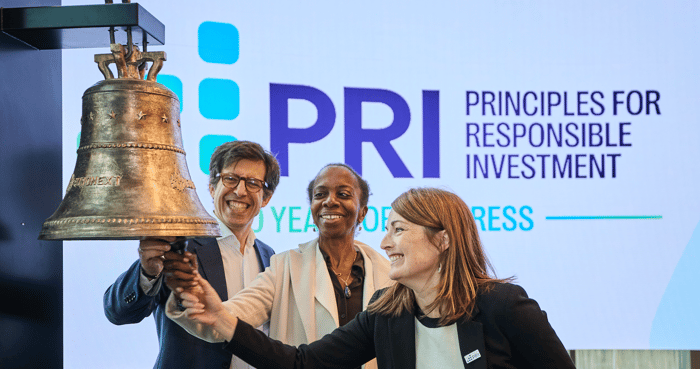
Photo credit: PRI
Lorenzo Saa Chief Sustainability Officer, Clarity AI
Twenty years ago, responsible investment was still a niche conversation. This month, as a PRI signatory and Board member, I had the privilege of participating in two symbolic moments in London and Paris, celebrating how far we have come.
Yet I left thinking less about the last twenty years and more about the next twenty.
During one of the sessions, we asked the audience a simple question: Is AI primarily an opportunity or a risk for investors? The result was almost perfectly split: 51% saw opportunity. 49% saw risk. In many ways, that may have been the most interesting answer possible.
Responsible investment has spent two decades becoming increasingly sophisticated at identifying and managing risk. We built frameworks, disclosures, and standards to make invisible risks visible. But I wonder whether we have also conditioned ourselves to instinctively look for the brakes before looking for the steering wheel. This is prioritising regulation and compliance over opportunity.
That is why I found the discussion around AI so interesting. While AI clearly offers speed and efficiency benefits, the audience looked beyond that. The greatest opportunity identified was enhanced analysis and insights. I often describe AI as both a cheetah and an owl. The cheetah helps us move faster. The owl helps us see better. Sustainable investing increasingly needs both, but I was encouraged that the audience valued the owl at least as much as the cheetah.
The biggest perceived AI risk was social: jobs, concentration of power, inclusion and human agency. Many AI risks are systemic and will shape how societies adapt to technological change.
Two clear calls to action for investors:
- First, do not sit back and wait. Start using AI. Test it, challenge it and learn from it. Use it not only for efficiency, but to strengthen judgment and enhance human capabilities. Sustainable investors should help lead the next wave of AI innovation, not slow it.
- Second, help shape AI responsibly. Engage on the broader societal questions AI raises, from skills and education to the future of work, within your organisations and across companies, governments, and wider stakeholders. AI governance and environmental impacts matter, but the social dimension deserves equal attention.
The next twenty years of responsible investment should not be defined by whether investors adopt AI, but by whether they help guide it so that technological progress and societal progress advance together.
Clarity AI - The AI-native platform for extra-financial intelligence
Published by
 investESG
investESG
