
We’re excited to bring you Spotlight on Impact. Each Spotlight on Impact takes our readers behind the scenes into one of the four Impact themes that guide Anthos Fund & Asset Management’s work throughout the year. In this edition, we explore Anthos’ Impact Theme of climate.
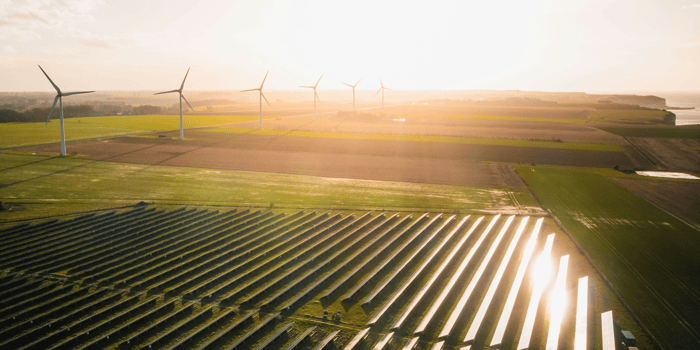
Photo credit: Benoît Deschasaux – Unsplash+
Why Climate Matters for Impact Investors
Climate change is one of the defining challenges of our time. Rising greenhouse gas emissions, increasing climate volatility and persistent inequalities in access to clean energy are shaping economic and social outcomes across the globe. For impact investors, climate is not only an environmental issue – it is deeply interconnected with human development, economic inclusion and long term resilience. At Anthos, climate is one of our four core impact thematics. Guided by our values of sustainability, human dignity and good corporate citizenship, we view climate investing as a powerful avenue through which we can protect the planet while also improving lives and livelihoods, particularly in emerging markets where the need for capital solutions is most acute.
At Anthos, our climate impact thematic is grounded in expanding access to affordable, reliable and renewable energy solutions, while helping accelerate the energy transition.
Energy sits at the heart of both the climate challenge and the development opportunity. How energy is produced and consumed today drives the majority of global greenhouse gas emissions. At the same time, access to modern energy services underpins almost every aspect of human development – from healthcare and education to employment and productivity. In many emerging markets, limited access to clean and reliable energy continues to constrain economic growth and disproportionately affects women, children and low-income households.
What Impact Looks Like – Addressing Unmet Needs
Despite growing momentum, current levels of investment in clean energy remain insufficient to meet global climate goals. Research by international institutions highlights that capital flows into renewable energy and broader climate solutions need to increase significantly – especially in emerging markets, which receive only a small share of global clean energy investment despite being home to most of the world’s population and some of the highest climate risks. This imbalance reinforces our conviction that climate impact investing must go beyond developed markets and mature technologies. Directing capital to underserved regions, and scaling solutions that combine climate mitigation with access, affordability, and resilience, is essential to delivering a just and inclusive transition.
Climate Impact Investing as a long-term, values-based investorWe therefore see climate orientated investing not only as a pivotal pathway to decarbonisation, but also as a powerful enabler and catalyst of social progress.
In line with our Impact Strategy, we focus on investments that contribute to the following:
- Universal access to affordable, reliable and modern energy services
- An increased share of renewable energy in the global energy mix
- Improved energy efficiency and resilient infrastructure
- Strengthened capacity to adapt to climate related risks and shocks
In practice, this means allocating capital to fund managers whose strategies are explicitly designed to deliver climate solutions through the products and services of their underlying investments. This includes renewable energy generation, enabling infrastructure, and technologies that support energy access and system efficiency, alongside a clear preference for strategies that address financing gaps in emerging markets. We invest across asset classes – public and private – recognising that different parts of the capital spectrum play complementary roles in scaling climate solutions.
Investing for Both Impact and Return
We believe investors don’t have to choose between doing good and doing well. Our approach targets market rate returns while directing capital to scalable, sustainable solutions – across liquid and illiquid strategies – so we can influence at depth (private markets) and at scale (public markets) across both Emerging Markets (EM) and Developed Markets (DM). To date, we have had a preference towards EM, where the need – and the potential for meaningful change – is greatest. The EM markets are home to the majority of the world’s population and face persistent financing gaps that well-designed capital can bridge.
Measuring what matters
As with all our impact thematics, we place strong emphasis on intentionality, measurement and accountability. For climate investments, we engage with our fund managers on key impact metrics such as:
- Renewable energy generated
- Installed clean energy capacity
- Greenhouse gas emissions avoided or reduced
These metrics are complemented by qualitative insights that help us understand how climate solutions are experienced on the ground – by households, businesses and communities. At portfolio level, climate is also a cross cutting theme. We collect climate data across our impact portfolios to support our broader commitment to environmental stewardship and our firm wide ambition to reach net zero by 2040.
Our Theory of Change for Climate – in Plain Language
A Theory of Change sits at the heart of an impact investment thesis. It sets out clearly and transparently how the capital we deploy (inputs) translates into real-world action (activities), measurable progress (outputs and outcomes), and ultimately the long-term impact we seek.
For climate, in simple terms, it looks like this: We begin with a clear conviction that being that access to clean, affordable energy is not only critical to reducing emissions; it is also essential to human development. When we, through our impact funds, invest in renewable power, efficient technologies and resilient infrastructure, we’re not just backing projects; we’re unlocking opportunities. These investments allow promising and innovative solutions to grow and scale, reach more people and strengthen the systems communities rely on every day. As clean energy becomes more widely available, households gain reliable power, local businesses expand, and regions move away from carbon intensive systems. Over time, these changes help reduce emissions, improve energy security and create more inclusive economic growth – especially in places where traditional capital has overlooked the need and the potential. In short: by directing capital where it’s most needed, we help accelerate a cleaner, fairer and more resilient energy future and one that narrows inequalities while protecting the planet. Furthermore, our approach to climate impact reflects a broader insight that is increasingly shared across the impact investing ecosystem: climate solutions and development outcomes are deeply interconnected. Research from organisations such as the Global Impact Investing Network (GIIN) and the Climate Policy Initiative shows that climate investments are most effective when they are designed to deliver measurable environmental outcomes while also supporting economic inclusion, job creation and community resilience. [...]
For a case study on climate in action, continue reading here.
Published by
 Anthos Fund & Asset Management
Anthos Fund & Asset Management
